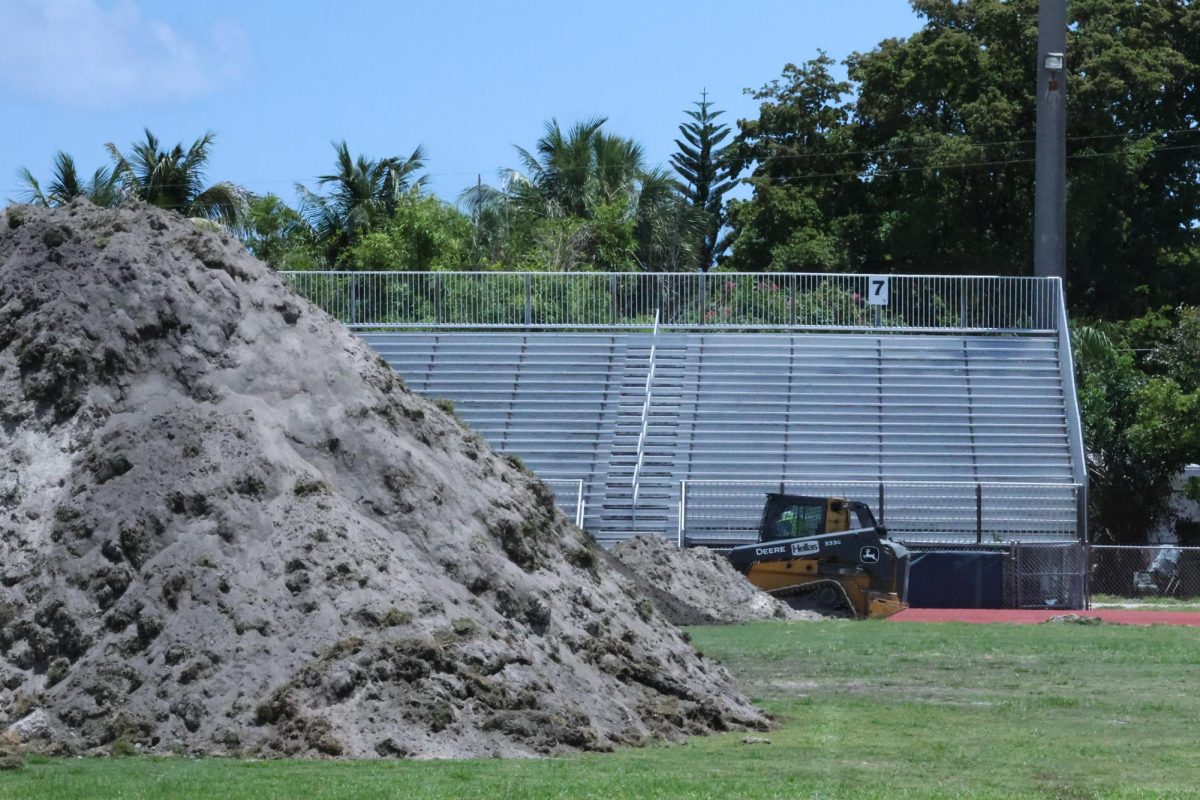

















Pompano Beach High School’s campus is home to Burrowing Owls, which are protected by Florida law. Because of their state-designated Threatened status, they may pose a threat to the construction of Pompano’s new turf football field.
Unlike other birds, the burrowing owl lives in a treeless habitat. Barren land is ideal for their burrows, which are located in the teacher parking lot, on the corner of 13th Ave. and Fourth St., and Pompano Beach Elementary school’s campus. Both their classification as Threatened and their protection under the Migratory Bird Treaty Act (MBTA) dictate that interference with them or their burrows is prohibited and punishable by fines.
Once the grass is removed from the school’s football field, the barren land will create the perfect environment for the owls to make their homes, in which case construction would then have to be paused. Scheduling around them isn’t possible because they don’t migrate, and they maintain their burrows year-round.
“Other schools have shut down football fields, practice fields, things like that. [Blanche Ely High School] a couple weeks ago, had one out there. Because they burrow, we’ve had to move practices and things like that, especially at the elementary school in the previous years,” Pompano’s Athletic Director Jason Frey said. “Maybe 20 years ago, they were over in the north area where we were replacing some turf and they showed up for a while, and then they left.”
Although a nuisance, the sacrifices that need to be made in order to protect the owls and their burrows are necessary in order to preserve the community’s unique biosphere.
“Understanding the importance of all wildlife and their role in our ecosystems is important, and knowing about burrowing owls allows students to help in protecting this important species,” AP Environmental Science teacher Liane Green said.
Continued loss of habitat is the primary threat to the species, which can result from construction, human and animal harassment, and flooding. Moreover, the owls are diurnal, meaning they’re active mainly in the daytime, making them more vulnerable to disruption by humans. Raccoons, snakes, hawks, and coyotes prey on the owls, and eliminating their population could create an imbalanced food chain within Pompano’s ecosystem.
The school needs to ensure they take considerable action to preserve and protect the owls’ presence as they proceed with construction. After all, Pompano is more than the home of the Golden Tornadoes, it serves as the habitat of an already imperiled species.