






















In this day and age, many American citizens are cautious towards the touchy subject of politics. However, politics should be talked about in the classroom.
Included in our first amendment as a U.S. citizen is the freedom of speech, upon which no laws can be made to obstruct. An exception to this law is made in schools, as schools are a learning environment and need to be disruption-free. Things that obstruct this are typically moved out the way to let business be as usual.
This does not mean that all things in political nature are immediately stricken from school. Instead, it provides the delicate line between harmless talk and causing a scene. Tinker v. Des Moines (1969) is the precedent on which this line formed. The Tinkers had lost twice before reaching the Supreme Court and overturning the original verdict to let students have their own political expression in the classroom unless there was proof of disruption.
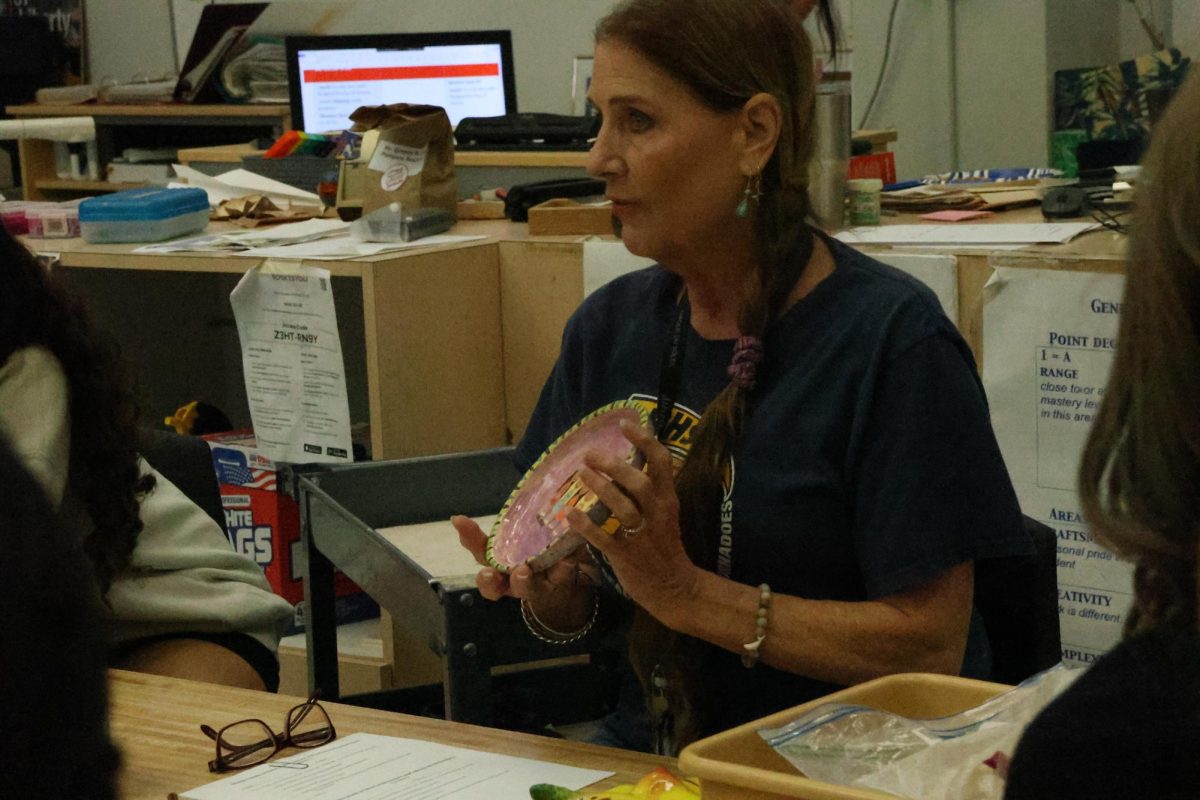
Even so, is the classroom an appropriate place to discuss politics among students? “[Talking about politics] could be a very sticky situation and end up being more dangerous than beneficial,” a PBHS teacher said. It’s oftentimes hard for this to be a topic of discussion within the classroom. Although I think it’s a skill best learned at a young age, peaceful intellectual discussion on diversifying topics like politics may cause harsh discourse. It’s understandable to see why teachers may avoid this topic wholly.
It seems like politics shouldn’t be talked about unless correlating to the lecture, but entering the world without this knowledge seems irresponsible. Students should learn, without bias, about political affairs. Many teachers try to avoid politics due to its nature, but Lazzy Ferlazzo, a social studies and English teacher said, “You have the privilege to not have to discuss politics with friends or in your life because the policies that are being discussed the majority of the time do not affect you; therefore, you believe you are immune.” This isn’t true, though, for all students. All students will grow up to be affected by the affairs of today.